S&P 500 vs a global index fund: what's the difference, and why it matters for UK investors
 Stuart Welch 8 min read
Spend five minutes on any UK investing forum and someone will ask it. Should I just buy the S&P 500, or a global fund? Within the hour there'll be forty replies, half of them saying "S&P 500, obviously, look at the returns", and the other half saying "global, obviously, don't be daft". Both camps will be absolutely certain. Neither will have changed anyone's mind.
My own mission is a simple four words: get more people investing. And I've watched arguments like this one do the opposite. A beginner asks a sensible question, gets forty contradictory answers, and decides to leave the money in a savings account "until they've worked it out". That's the worst outcome of all, and far worse than picking either fund.
I think the reason it goes round in circles is that most people arguing about it haven't looked at what's actually inside the two funds. Once you do, the question gets a lot smaller, and a lot more interesting.
So here's what each one is, how much they overlap (more than you'd think), what the real difference comes down to, and the questions worth asking yourself. As always, this is general information, not advice. Which suits you depends on things only you know.
What's in an S&P 500 fund?
The S&P 500 is an index of around 500 of the largest companies listed in the United States. As of 30 September 2026 it had 503 members, because a few companies have more than one class of share in it.
It's weighted by size. The bigger the company's stock market value, the bigger its slice of the index. That's perfectly normal; almost every major index works this way. But it means the "500" is a bit misleading, because a small number of giants now dominate it. At the end of September 2026, the ten biggest companies made up 39.1% of the whole index. For most of the 1990s and 2000s that figure hovered around a fifth.
So when you buy an S&P 500 tracker you're buying 500 American companies, yes, but nearly 40p in every pound goes into just ten of them, most of them technology businesses.
What's in a global index fund?
A global index fund tracks an index of companies from all over the world. The two big families are MSCI and FTSE:
- MSCI ACWI ("All Country World Index") covers large and medium-sized companies in 23 developed and 24 emerging countries, around 2,450 companies.
- FTSE All-World is similar but broader, with roughly 4,270 companies from around 48 countries.
- MSCI World, which you'll also see a lot, covers developed countries only, so it leaves out emerging markets like China, India and Taiwan.
They're weighted by size too. And here's the bit that surprises people.
The surprise: a global fund is already mostly American
In the MSCI ACWI, US companies made up 63.6% of the index at the end of August 2026. In the FTSE All-World it's a similar story, at around 62–63%. Japan, the next biggest, is about 5%. The UK is about 3%.
So a "global" fund is roughly two-thirds American already. And the biggest holdings in it are the same names that top the S&P 500: Nvidia, Apple, Microsoft and friends.
That's why I say the question gets smaller once you look inside. You aren't choosing between "America" and "the world". You're choosing between 100% US and about 63% US plus about 37% everything else. The real decision is about that other third or so.
It wasn't always like this. At the end of the 2008 financial crisis the US was about 41% of the FTSE All-World. Back in 1987, when the index started, it was 37%, roughly level with Japan. American companies have simply grown far faster than everyone else's over the last fifteen years, and the index has followed.
The case people make for the S&P 500
It's worth taking the S&P 500 camp seriously, because they're not being silly.
- It's done brilliantly. Over the last fifteen years or so, US shares have beaten most of the rest of the world by a wide margin. Anyone who held only the S&P 500 has done very well indeed.
- The companies are global anyway. Apple, Microsoft and Amazon sell all over the world. Owning them gives you a lot of indirect international exposure.
- It's often very cheap. S&P 500 trackers are some of the lowest-cost funds you can buy.
- It's simple to understand. Big American companies. Done.
The case people make for a global fund
- Nobody knows which country wins next. The US has led for fifteen years. Before that it didn't. In 2025, the rest of the world actually beat America: FTSE's All-World ex US index returned 32.6% against 18% for its US index, in dollar terms.
- Single countries can have very long bad patches. From the start of 2000 to the end of 2009, the S&P 500 produced a total return of about minus 9%, dividends included. Ten years, and less money than you started with. Japan is the extreme example: its stock market peaked in 1989 and didn't get back to that level until 2024. Thirty-four years.
- It's less concentrated. The ten largest companies make up a smaller share of a global fund than of the S&P 500, and the other third of the money is spread across thousands of companies in dozens of countries.
- You're not betting on one economy, one currency or one government. For a UK investor, that seems to me quite a sensible thing to avoid by default.
What I think
I'll be honest: I think the global fund is the more sensible default for most people starting out.
In my experience, the key thing in investing is trying to get diversification across the board: across companies, across industries and across countries. That's what protects you from the thing nobody can predict, and it's what a global fund does by design. An S&P 500 fund gets you the first of those, and some of the second, but not the third.
Not because America is about to fall over. It might keep winning for another twenty years, and if it does, a global fund still gives you about two-thirds of that ride. It's because a global fund doesn't require you to have a view. An S&P 500 fund is, quietly, a bet that the US will keep outperforming. That's a perfectly reasonable bet to make, but I think you should make it on purpose, not by accident because it was top of a Reddit thread.
The other reason is that one of the most important things in investing is to keep it simple. One global fund, held for decades and topped up regularly, is about as simple as investing gets. You don't need to decide which country is next, rebalance between regions or read the financial pages. The simpler your plan, the more likely you are to stick with it, and sticking with it is where most of the returns come from.
The one thing I'd push back on is the idea that the global fund is the "safe" option. It isn't. It's still nearly all shares, it's still heavily American, and it'll still fall hard when markets fall. In 2008 and early 2020, global shares fell about as hard as American ones. Diversifying across countries smooths out the bumps in one place. It doesn't stop the whole world having a bad year.
Things UK investors often miss
Currency. Both funds are mostly priced in dollars underneath, so the pound–dollar exchange rate moves your returns either way. If the pound strengthens, your US shares are worth fewer pounds, and the reverse. A global fund is still about 63% exposed to the dollar, so this isn't a big difference between the two, but it's worth knowing it's there.
Holding both doesn't do what people think. Some people buy an S&P 500 fund and a global fund, believing they've diversified. In fact they've just tilted further towards the US, and towards the same handful of tech giants. That's fine if it's deliberate. But it's not extra diversification.
The UK is tiny in a global fund. About 3%. Some UK investors like to add a UK fund on top, for familiarity or for the dividends. That's a personal choice. Just know the global fund isn't giving you much home-country exposure on its own.
Check what "global" means. "World" funds tracking MSCI World leave out emerging markets. "All-World" or "ACWI" funds include them. The difference is about 10% of the money, so it isn't huge, but it's worth knowing which one you're buying.
Charges. Both kinds are usually cheap, often well under 0.25% a year. Global trackers sometimes cost a touch more than S&P 500 ones. The difference is small compared with most other choices you'll make, so I wouldn't let a few hundredths of a percent decide it.
Questions worth asking yourself
- Do I actually have a view on America? If yes, and you understand you're making a bet, an S&P 500 fund is a legitimate choice. If no, a global fund avoids needing one.
- Could I stick with it through a lost decade? If the S&P 500 went sideways for ten years while the rest of the world rose, would you hold on, or would you sell at the worst moment and switch?
- What else do I own? If your workplace pension's default fund is already global, or already US-heavy, that changes the picture for your ISA.
- Am I choosing this because of the last ten years? Recent winners always look like obvious choices. That's exactly when it's worth slowing down.
The short version
- An S&P 500 fund is about 500 large US companies, with nearly 40% in the top ten.
- A global fund is thousands of companies worldwide, but already about 63% American.
- The real choice is whether you want that other third or so in the rest of the world.
- The S&P 500 has done better recently. History says that leadership doesn't last forever, and nobody knows when it changes.
- I think a global fund is the more sensible default for most beginners. It spreads your money across the board and doesn't need you to predict anything.
- Keep it simple. Either fund, held for the long term, beats endlessly debating which one to buy.
If index funds are new to you, start with what an index fund is, then diversification explained and ETFs vs index funds. And if you want the whole thing from the ground up, with worked examples, that's what Simple Investing for Absolute Beginners is for.
This article is general information, not personal financial advice, and it doesn't recommend any particular fund. The value of investments can fall as well as rise and you may get back less than you put in. Past performance is not a reliable guide to future returns. Index figures are from MSCI, FTSE Russell and S&P Dow Jones Indices data as published in 2026 and will change over time. If you're unsure what's right for you, MoneyHelper offers free, impartial guidance, or you can speak to a regulated financial adviser.
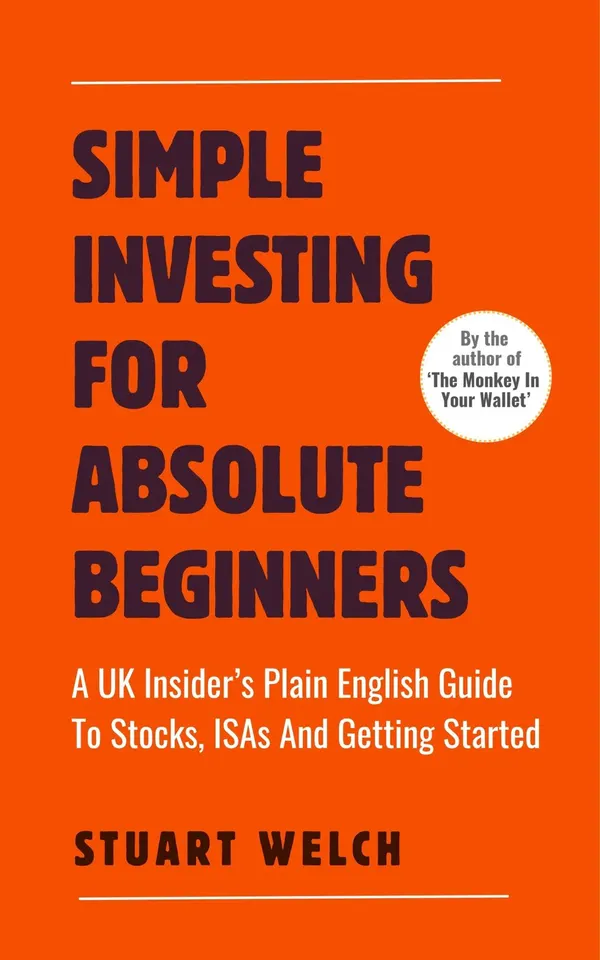
Simple Investing for Absolute Beginners
“Everything you need to know. Nothing you don't. In one afternoon.”
“The author clearly knows this world inside out, but writes like he's talking to a reasonable adult who just hasn't got round to it yet. … If you've been meaning to sort your finances out "at some point," this is the nudge that actually works.”Mrs Carolyn Fortune, Amazon review
Recommended reading on this topic
Full list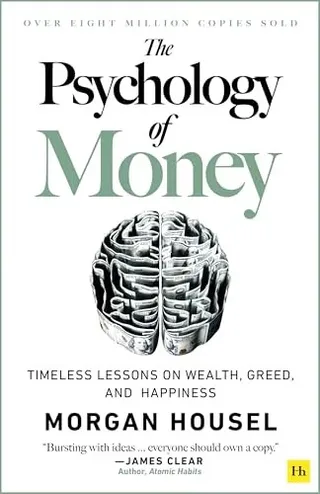
The Psychology of Money
Morgan Housel
Short stories about how people actually behave with money. Not a how-to, but it explains why simple plans fail and how to stick with yours.
View on Amazon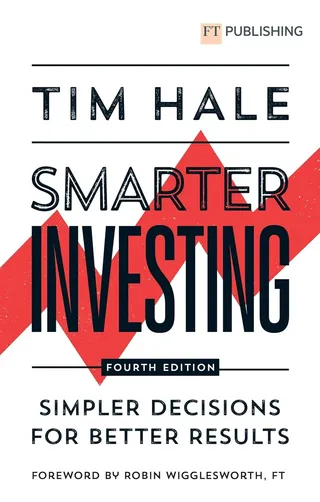
Smarter Investing
Tim Hale
The go-to book for UK investors who want the evidence-based, index-fund approach explained properly, from philosophy through to choosing actual funds. More detailed than a beginner book, so a great second read.
View on Amazon