FIRE and Coast FIRE calculator (UK)
How much do you need to stop working, and when could you get there? This calculator works out your FIRE number the UK way, allowing for the State Pension, and your Coast FIRE number: the point where you could stop saving and let growth do the rest.
Everything is in today's money. Nothing you enter leaves your browser. Last updated 17 November 2026, using 2026/27 State Pension figures.
This is an illustration, not financial advice. The results depend entirely on the assumptions you enter and aren't a forecast or a guarantee. Please read the important information before relying on them.
Financial independence
–
Your FIRE number at 60
–
Your Coast FIRE number today
–
Your pot against your FIRE number, by age
How reliable is this projection?
The same numbers at three different growth rates. Real returns won't be steady, so it's worth checking your plan still works in the cautious column.
Cautious, 3%
–
Middle, 4%
–
Optimistic, 5%
–
Age you could reach financial independence, with growth after inflation and charges.
These figures are illustrations, not advice or a guarantee. They assume steady growth every year, which real markets never deliver. The value of investments can fall as well as rise, and you could get back less than you put in. The calculator doesn't allow for tax, charges, inflation surprises or your personal circumstances. Before making decisions about your pension or retirement, consider speaking to a regulated financial adviser. More information.
How the calculator works
Most FIRE calculators are American. They take your annual spending and multiply it by 25, which assumes your investments will pay for everything, for the rest of your life. In the UK that overstates what most people need, because the State Pension arrives at 67 and covers a large part of the bill from then on.
So this calculator splits retirement into two phases, the same way I explain it in how to calculate your FIRE number:
- Before State Pension age, your investments pay for all your spending.
- From State Pension age, they only need to pay the gap between your spending and the State Pension. That gap is divided by your withdrawal rate to give the pot needed for the rest of your life.
Your FIRE number is the money for the years before the State Pension, plus the pot for the gap afterwards. It's never more than the simple "spending divided by withdrawal rate" figure, because that would cover your full spending for life on its own.
The calculator is deliberately cautious. It assumes the money for the years before the State Pension earns no growth, and it uses a 3.5% withdrawal rate by default rather than the American 4%, because UK retirements that start early can last 40 years or more. You can change both.
Coast FIRE
Your Coast FIRE number is how much you'd need invested today so that, without adding another penny, growth alone would get you to your FIRE number by the age you'd fully stop work. Once you've reached it, you only need to earn enough to cover your living costs. Read more in Coast FIRE explained.
What it doesn't do
- Tax. Enter your spending after tax, and remember that pension withdrawals are partly taxable. Money in ISAs comes out tax-free.
- Pension access age. Most people can't take money from a private pension until 57 (from April 2028). Some people and schemes have a protected pension age, so check your own scheme's rules. If you're aiming to stop before you can access your pension, the early years have to come from ISAs and other savings. The calculator will flag this.
- Changing spending and a long retirement. It assumes you spend the same amount, in today's money, every year. In reality spending tends to change with age and health. Retiring early can also mean your money has to last 40 to 50 years, so a margin of safety matters.
- Other income. If you'll have a final salary pension, rental income or part-time earnings, reduce the spending figure to the amount your investments need to cover.
- Charges. It doesn't deduct platform or fund charges. Use a growth rate after charges: if you expect 5% a year and pay 0.5% in charges, use about 4.5%.
- Market ups and downs. It uses a steady growth rate. Real returns vary year to year, and a bad run of markets just as you stop work can do lasting damage, which is why a margin of safety matters.
Questions people ask
What is a FIRE number?
Your FIRE number is the amount you need invested to stop depending on a salary: enough that sensible withdrawals cover your spending for the rest of your life. In the UK it's usually lower than the American "25 times spending" rule suggests, because of the State Pension.
What growth rate should I use?
The growth rates here are after inflation. A global stock market index fund has historically returned roughly 5% a year above inflation over long periods, but past returns aren't a promise. 4% is a sensible middle assumption, and 3% is a useful stress test.
Should I include my home?
No, unless you plan to sell it or downsize and live off the proceeds. FIRE is about investments that can pay you an income.
Is this financial advice?
No. It's a planning tool to help you see the shape of the numbers. For decisions about your own pension and retirement, a regulated financial adviser can look at your full circumstances.
For the full picture, start with how FIRE actually works in the UK, and the types of FIRE to see which version suits you.
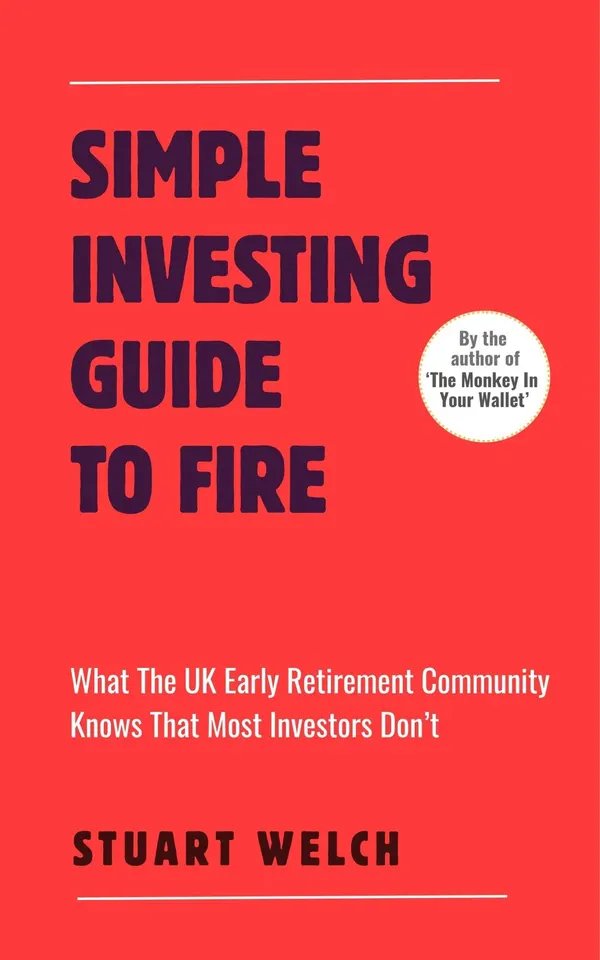
Simple Investing Guide to FIRE
“What the UK early retirement community knows that most investors don't.”
“I've read a few things about FIRE before but a lot of them are very US focused, so I really liked that this is written specifically for people in the UK. It explains things like ISAs, SIPPs, the state pension and the 4% rule without making everything unnecessarily complicated. … I came away feeling like I understood the whole idea of FIRE much better and, more importantly, what I could actually do with it.”Plamena Zahova, Amazon review
Important information
This calculator is for illustration and education only. It is not financial advice, and it is not a personal recommendation to take any course of action. It can't take account of your full circumstances, needs or attitude to risk.
The results are not a forecast or a guarantee. They depend entirely on the figures and assumptions you enter. Small changes to the growth rate, withdrawal rate or spending can change the results a great deal.
Investment risk. The value of investments, and any income from them, can fall as well as rise, and you could get back less than you invest. Past performance is not a reliable guide to future returns. The calculator assumes the same growth every year; real returns vary, sometimes sharply.
The withdrawal rate is an assumption, not a guarantee. A 3.5% or 4% withdrawal rate is a planning guideline, not a promise that your money will last for the rest of your life. Whether withdrawals are sustainable depends on investment returns (especially in the first years of retirement), inflation, charges, how long you live, and whether you adjust your spending when markets fall.
Spending and lifespan. The calculator assumes your spending stays the same in today's money every year, and doesn't predict how long you'll live or allow for leaving an inheritance. Retiring early could mean funding 40 to 50 years or more. Consider using cautious assumptions and allowing a margin of safety rather than relying on a single figure.
What isn't included. The calculator doesn't allow for income tax on pension withdrawals, investment charges, changes in your spending over retirement, care costs, or changes to tax and pension rules, all of which could affect how much you need.
Rules can change. State Pension amounts, State Pension age, the age you can take money from a private pension, and tax rules can all change in future. Most people won't be able to take money from a defined contribution pension until 57 from April 2028, although some have a protected pension age. Defined benefit (final salary) pensions aren't modelled: reduce your spending figure by the income they'll provide. The State Pension figure used is the full new State Pension for 2026/27 (£241.30 a week). Your own entitlement may be different: check it at gov.uk/check-state-pension.
Get advice if you need it. Before making decisions about your pension, your investments or when to stop work, consider speaking to a regulated financial adviser. Free, impartial guidance is also available from MoneyHelper, and from Pension Wise if you're 50 or over and have a defined contribution pension.