The six questions every new investor asks (and the honest answers)
 Stuart Welch 8 min read
Everyone who starts investing asks the same handful of questions. Usually late at night. Usually typed into Google in a slightly embarrassed way, as if everyone else was born knowing what an index fund is.
They weren't. I spent twenty-five years in financial services and I can promise you that a surprising number of people in the industry would struggle to explain half of this over a pint. These questions aren't naive. They're exactly the right ones to ask.
So here they are, the six I hear most, with short, honest answers. Each one links to a longer article if you want to go deeper. None of it is personal advice, because I don't know your situation, but it should leave you knowing what you're looking at.
1. How much money do I need to start investing?
Much less than you think. On most mainstream UK platforms you can start with £25 a month, and a few let you start with less. The days of needing a few thousand pounds and a man in a pinstripe suit are long gone.
What you need more than money is a bit of groundwork. Before investing, most people find it makes sense to have:
- No expensive debt. Paying off a credit card charging 25% is a guaranteed 25% return. No investment reliably beats that.
- An emergency fund in cash. Often suggested as three to six months of essential spending, so a broken boiler doesn't force you to sell investments at a bad moment.
- Money you won't need for at least five years. Shares go up and down. Time is what smooths that out.
If those are in place, I think the amount matters far less than the habit. £50 a month started now will very likely do more for you than £5,000 you keep meaning to invest "when things settle down". Things never settle down.
The full answer, with what each platform's minimums are, is in how much money you actually need to start investing.
2. Can I lose my money, and how risky is investing?
Yes, you can lose money. Anyone who tells you otherwise is either selling something or hasn't been paying attention.
But there are two very different kinds of "losing money", and it's worth separating them.
Prices going down. This is normal. It happens all the time. Stock markets have big falls every few years, and occasionally very big ones. In 2008–09, global shares fell by around half from their peak, and in early 2020 they dropped by about a third in a few weeks. If you'd needed your money that month, it would have hurt. Historically, though, markets have recovered from every one of those falls and gone on to new highs, although it has sometimes taken years, and past performance never guarantees the future.
Losing it for good. This is much rarer if you're sensible. It mostly happens when people put everything into one company that goes bust, chase something that promises spectacular returns, or panic-sell at the bottom and never go back in. Spreading your money across thousands of companies, using a regulated platform and leaving it alone for the long term takes most of that risk off the table.
And what if the platform itself goes bust? Your investments are held separately from the platform's own money, so they should still be yours. If something has gone wrong, the Financial Services Compensation Scheme (FSCS) can cover up to £85,000 per person, per firm. It doesn't protect you against markets falling, though. That risk is yours.
The honest summary: in the short term, investing is risky. Over ten years or more, history suggests that keeping everything in cash carries its own risk, because inflation quietly eats it. The guide to risk and reward explains how to think about how much risk suits you, and what to do when the stock market falls is worth reading before it happens.
3. What should I actually invest my money in?
This is where the industry loves to make things complicated, with thousands of funds, star managers and "thematic opportunities". I think for most beginners the honest answer is boringly simple.
Many long-term investors start with a low-cost global index fund. That's a single fund that owns small pieces of thousands of companies around the world, in proportion to their size. You get Apple and Nestlé and Toyota and thousands of others in one go, for a yearly charge that can be well under 0.25%.
Why do so many people end up there?
- It's spread out. If one company, or one country, has a terrible decade, you barely notice.
- It's cheap. Low charges are one of the few things that reliably improve your returns.
- It's hard to beat. Most professionally managed "active" funds fail to beat the index they're measured against over the long run, once their higher fees are taken off.
Some people add bonds to make things less bumpy, especially as they get older or closer to needing the money. Others prefer an "all-in-one" fund that does the mix for them. And some choose ethical or sustainable versions. Which mix suits you depends on your timescale and how you'd cope with seeing your pot fall by a third.
What I'd be wary of, as a beginner, is anything you can't explain to a friend in two sentences.
Start with what an index fund is, then active vs passive funds and diversification explained.
4. What's a Stocks and Shares ISA, and do I need one?
A Stocks and Shares ISA is a tax-free box for your investments. Like a pension, it isn't an investment itself. It's a wrapper that the investments sit inside.
What makes it good:
- No tax on growth. No capital gains tax, no tax on dividends, no tax on interest, ever.
- No tax coming out. You can take your money out at any time, for any reason, and you don't pay a penny of tax on it.
- You don't even put it on a tax return. It's invisible to HMRC.
You can put in up to £20,000 a year across all your ISAs, and you need to be 18 or over and UK resident.
Do you need one? Strictly no. You could invest in an ordinary account instead. But if you're a UK taxpayer investing for the long term, I struggle to think of a good reason not to use the ISA first. It costs nothing extra on most platforms, and the tax savings add up a lot over twenty or thirty years.
The one thing an ISA can't match is a workplace pension with an employer contribution. If your employer will match what you pay in, that's usually worth capturing before anything else. The Stocks and Shares ISA vs SIPP comparison explains how the two fit together.
For the full picture, see what a Stocks and Shares ISA is and why most UK investors start there and the round-up of the different types of ISA.
5. Where do I start, and which investment platform should I use?
A platform is simply the website or app where you open your ISA and buy your investments. Think of it as the shop. Vanguard, AJ Bell, Hargreaves Lansdown, Fidelity, Interactive Investor, InvestEngine and Trading 212 are some of the big names.
I think three things matter much more than the shiny app or the advert:
- What it costs at your size. Some platforms charge a percentage, which is cheap when you're small. Others charge a flat fee, which is cheap when you're bigger. The "best" platform at £5,000 isn't always the best at £100,000.
- Whether it has what you want to buy. If you just want a global index fund, almost all of them do. If you want a particular fund, check it's there.
- That it's regulated by the FCA. You can check any firm on the FCA register in a couple of minutes.
The truth is, for most beginners there isn't one perfect answer, just several perfectly decent ones. And you can move later. Transfers between platforms are routine and your ISA keeps its tax-free status, as long as you use the platform's transfer process rather than withdrawing the money yourself.
As for where to start, a simple order many beginners find helpful is: open the account, set up a modest monthly payment into one broad, low-cost fund, and then, crucially, leave it alone.
Our comparison of investment platforms for UK beginners shows what each one actually costs at different pot sizes. Then how investment platform fees work explains the small print. And if you want the whole thing step by step, the Start Here beginner's guide walks through it from scratch.
6. How do I know if I'm making the right investment decisions?
This is the one that keeps people awake, and I think it's the most misunderstood.
You can't judge an investment decision by what happens next month. Or next year, really. Markets are noisy. A perfectly sensible decision can look terrible for eighteen months, and a reckless one can look brilliant right up until it doesn't. Checking your account every day is a reliable way to feel anxious and make worse decisions.
A better test is whether your decisions were sensible for you at the time you made them, and whether they still are. A few questions worth asking yourself once a year:
- Is my money spread widely, rather than concentrated in a handful of companies or one country?
- Are my charges low? Can I see exactly what I'm paying?
- Does my mix still match my timescale? Money needed in two years probably shouldn't be invested the same way as money for thirty years' time.
- Am I still investing regularly, rather than stopping and starting with the headlines?
- Over ten years or so, is it roughly keeping pace with the market it's meant to follow, after charges?
If the answers are mostly yes, I'd say you're doing fine, whatever the last few months look like. Most of the damage in investing comes not from picking the "wrong" fund but from doing something drastic at the wrong moment.
The 10-year test for whether your strategy is working goes into this properly, and the most common beginner investing mistakes are worth a look so you can sidestep them.
The short version
- You can start with £25 a month, once the groundwork is done.
- Yes, values go down as well as up. Spreading your money and giving it time are what help.
- Many beginners start with one cheap global index fund.
- A Stocks and Shares ISA is usually the place to hold it.
- Pick a regulated platform that's cheap at your size. You can always move later.
- Judge yourself over years, not weeks.
None of this needs a finance degree. It needs a small amount of reading, a modest monthly amount, and the patience to let it get on with things. I wrote Simple Investing for Absolute Beginners to walk through each of these in more depth, with worked examples. But if you've read this far, you already know enough to make a sensible start.
This article is general information, not personal financial advice. The value of investments can fall as well as rise and you may get back less than you put in. Tax rules depend on your circumstances and can change. If you're unsure what's right for you, MoneyHelper offers free, impartial guidance, or you can speak to a regulated financial adviser.
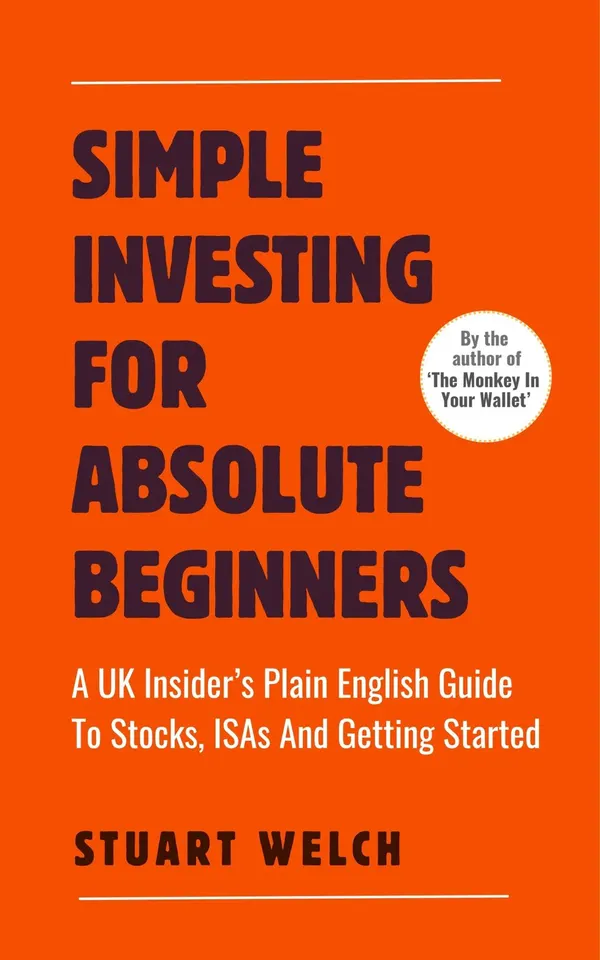
Simple Investing for Absolute Beginners
“Everything you need to know. Nothing you don't. In one afternoon.”
“The author clearly knows this world inside out, but writes like he's talking to a reasonable adult who just hasn't got round to it yet. … If you've been meaning to sort your finances out "at some point," this is the nudge that actually works.”Mrs Carolyn Fortune, Amazon review
Recommended reading on this topic
Full list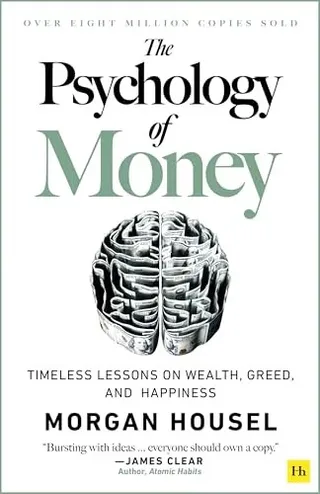
The Psychology of Money
Morgan Housel
Short stories about how people actually behave with money. Not a how-to, but it explains why simple plans fail and how to stick with yours.
View on Amazon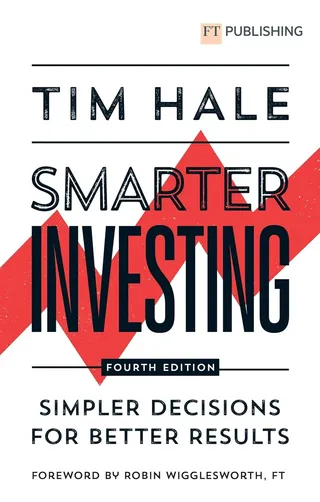
Smarter Investing
Tim Hale
The go-to book for UK investors who want the evidence-based, index-fund approach explained properly, from philosophy through to choosing actual funds. More detailed than a beginner book, so a great second read.
View on Amazon