How to calculate your FIRE number in the UK (and why most people get it wrong)

If you've spent any time looking into FIRE (Financial Independence, Retire Early), you'll have come across a deceptively simple equation. Multiply your annual spending by 25, the formula says, and that's the size of investment portfolio you need to retire. £30,000 a year of spending becomes a target of £750,000. £40,000 becomes £1 million. Job done.
In practice, calculating your FIRE number properly is harder than the formula suggests, and most people who do it casually get it meaningfully wrong. Sometimes wrong by enough that they hit their target only to discover they've underestimated their actual needs. Sometimes wrong in the other direction, working towards a number that's much larger than they actually need.
This post is the careful version of the calculation. It covers why the simple formula misleads people, how to estimate your real annual spending, the UK-specific adjustments most articles skip, and a worked example you can use as a template for your own situation. If you'd rather go straight to your own figure, our free FIRE calculator uses exactly this method.
Why the simple formula misleads people
The £30,000 × 25 = £750,000 calculation hides several assumptions that often don't hold for individual situations.
Assumption 1: Your annual spending number is accurate. Most people significantly underestimate their actual spending. They think about regular bills (rent, food, utilities) and forget about irregular ones (annual travel, gifts, car repairs, dental work, gadget replacements). A reasonable estimate based on a tracked year of expenses is dramatically more accurate than a quick guess.
Assumption 2: Your spending stays at that level for the whole retirement. It usually doesn't. Most retirees spend more in the early "go-go" years (when they're healthy and want to travel and do things) and less in the later years. Some have substantial one-off costs in the first few years (a long-anticipated round-the-world trip, finally renovating the house). Some face significantly higher healthcare costs in the late years.
Assumption 3: You'll need the same income for life. For most UK retirees, this isn't true. The State Pension kicks in around age 67/68, providing a substantial layer of income that wasn't there before. Defined benefit pensions, if you have them, do similar. Inheritance, downsizing the house, and other lifecycle events can reduce your portfolio's burden.
Assumption 4: You'll never earn another penny. Most early retirees end up doing some kind of paid work, even when they didn't plan to. A small income stream in early retirement (a hobby business, occasional consulting, part-time work) reduces the burden on your portfolio enormously.
Assumption 5: Inflation, taxes, and fees behave perfectly. The 4% rule that underpins the 25x formula was based on US data, didn't fully account for fees, and assumed clean inflation adjustment. Real-world UK retirees face slightly different conditions.
Each of these assumptions can move your real FIRE number meaningfully in one direction or the other. The formula is a starting point, not an answer.
Step 1: Estimate your actual annual spending
Before you can calculate a FIRE number, you need a defensible estimate of what you'll spend in retirement. Three methods, in increasing order of accuracy:
The casual estimate. Take a guess based on rough monthly costs. Most people land somewhere around £20,000 to £40,000 a year for a single person, more for a couple. Quick and easy, but usually wrong by 20% or more.
The current-spending baseline. Track your actual spending for 3 to 6 months across all categories: housing, utilities, food, transport, entertainment, subscriptions, gifts, holidays, insurance, healthcare, and miscellaneous. Multiply by 12. This gives you a much better number than the casual estimate, but it captures your current life rather than your retirement life.
The retirement-projected estimate. Start from the current-spending baseline, then adjust for what changes in retirement:
- Subtract: commuting costs, work clothes, work lunches, work-related subscriptions, mortgage payments (if your house will be paid off), child-related costs (if applicable), pension contributions (you stop making them when you retire).
- Add: more travel, more leisure spending, healthcare top-ups, hobby costs, possibly higher heating bills (because you're at home more).
- Adjust: tax (you'll pay less because retirement income is generally lower than working income), housing (consider whether you'll rent, own outright, or move).
This is the right method, and it's worth doing carefully. Most people find their projected retirement spending is somewhere between 70% and 90% of their working-age spending, but the distribution varies a lot by lifestyle.
Step 2: Subtract guaranteed retirement income
Once you have an annual spending estimate, subtract the income that will arrive automatically in retirement. The portfolio only needs to fund the gap.
For UK retirees, the main sources of guaranteed income are:
The State Pension. £12,548 a year for a full new State Pension in 2026/27 (£241.30 a week), rising to £13,036 in 2027/28. It's inflation-protected and paid from 67 for most people, possibly 68 for younger savers in future. Get an official forecast from gov.uk; the actual figure depends on your National Insurance contribution history.
Defined benefit pensions. If you have an old final salary or career-average pension from a previous employer, this provides guaranteed income for life. Most UK workers under 50 don't have these, but they're worth substantial amounts to the older cohort who do.
Annuities. If you've already converted some pension into an annuity, this pays guaranteed income.
Rental income. If you own a buy-to-let or have any other reliable rental stream.
For someone aiming to spend £35,000 a year in retirement, with a full £12,548 State Pension expected, the portfolio only needs to fund a gap of about £22,450. (For couples, both partners' State Pensions stack, potentially providing £25,096 of guaranteed income.)
This is the single biggest adjustment most US-influenced FIRE articles miss. The portfolio you need is much smaller than the simple 25x formula suggests, once the State Pension is factored in.
Step 3: Apply the multiplier
Now you can apply the 25x rule, but to the gap rather than the total spending.
FIRE number = (annual spending - guaranteed income) × 25
If your annual spending estimate is £35,000 and your expected State Pension is £12,548, the gap is about £22,450. Your FIRE number is £22,450 × 25 = about £561,000, not the £875,000 the simple formula would suggest. That's a difference of over £300,000, which translates to several years of additional working life.
But there's a complication: the State Pension only kicks in at 67/68. If you're aiming for FIRE at 50, you have 17 to 18 years where the State Pension isn't yet helping. During that bridge period, your portfolio needs to fund the full spending amount, not just the gap.
This is where the calculation gets more nuanced.
Step 4: Adjust for the bridge period
For someone retiring well before State Pension age, a more accurate calculation breaks the retirement into two phases:
Phase 1 (early retirement to State Pension age): Portfolio funds full annual spending.
Phase 2 (State Pension age onwards): Portfolio funds only the gap between annual spending and guaranteed income.
The full FIRE number is roughly the higher of:
- The amount needed for Phase 2 indefinitely (£gap × 25), and
- A combined figure that handles the larger withdrawals during Phase 1 plus the smaller withdrawals afterwards.
Our free FIRE and Coast FIRE calculator handles this two-phase calculation automatically. It takes account of when the State Pension begins and adjusts the portfolio target to the age you want to stop.
For most UK FIRE planners, the result is that the bridge period (the years before State Pension and DB pensions kick in) drives most of the portfolio requirement. Once you've got enough to bridge that gap, the rest tends to take care of itself.
Step 5: Choose your conservatism factor
The 4% rule (and its 25x corollary) was calibrated for a 30-year retirement using US historical data. UK FIRE planners need to consider:
- Longer retirements. If you retire at 50 and live to 95, that's 45 years, not 30. The 4% rule may be too aggressive.
- UK-specific data. UK equity returns have historically been lower than US returns. A small downward adjustment is sensible.
- Fees. The original studies didn't include modern platform fees and fund OCFs. Subtract roughly 0.5% to 0.7% from your safe withdrawal rate.
- Sequence-of-returns risk. A bad market in the first few years of retirement does disproportionate damage. Margins of safety help.
A common UK-friendly adjustment is to use 28x or 30x instead of 25x, which corresponds to a 3.3% or 3.5% withdrawal rate. This is more conservative but historically more robust.
So the modified formula becomes:
Conservative FIRE number = (annual spending - guaranteed income) × 28 to 30
For our worked example (a gap of about £22,450), this becomes roughly £630,000 to £675,000, rather than the £561,000 from the basic 25x calculation. The extra cushion buys you safety against bad market conditions in the first decade of retirement.
For a fuller treatment of safe withdrawal rates and how to think about the 4% rule specifically, see our post on the 4% rule for UK retirees.
A worked example: a UK couple targeting FIRE at 50
To make this concrete, here's a full example.
Setup: A couple, both 35, targeting financial independence by 50.
Current spending: £42,000 per year (tracked over 6 months).
Projected retirement spending: £36,000 per year (subtracting commuting, work-related costs, pension contributions; adding modest extra travel).
Guaranteed income at State Pension age (67): 2 × £12,548 = £25,096 per year.
The calculation:
- Annual spending in retirement: £36,000
- Phase 1 (50 to 67): no guaranteed income; need £36,000/year from portfolio for 17 years.
- Phase 2 (67+): need £36,000 - £25,096 = £10,904/year from portfolio.
- Phase 2 multiplier (using a conservative 28x): £10,904 × 28 = about £305,000.
- Phase 1 funding: 17 years × £36,000 = £612,000. This is a deliberately cautious figure: it ignores any growth on the bridge money while they spend it, which gives a margin for poor markets.
Add the two together and the combined FIRE number lands at roughly £900,000 to £950,000 for this couple, depending on assumptions. That's close to the simple 25x of total spending (£900,000), because a 17-year bridge before the State Pension means their investments have to carry the full cost for a long time.
The bridge period is doing most of the work. If they were targeting FIRE at 60 instead of 50, the bridge would shrink to 7 years (7 × £36,000 = £252,000), and their FIRE number would fall to roughly £560,000. You can try different ages in the FIRE calculator.
Common mistakes to avoid
A few traps to be aware of:
Mistake 1: Using gross income rather than net spending. Income includes the tax you pay. What matters for FIRE is how much you actually spend, after tax.
Mistake 2: Forgetting irregular costs. Cars, holidays, home repairs, gifts, dental work, replacement appliances. These average out to a substantial annual amount that's invisible in any single month.
Mistake 3: Assuming the State Pension is irrelevant. It's not. For most UK retirees it's the single largest source of retirement income. Ignoring it leads to massively inflated FIRE numbers.
Mistake 4: Using a single number for spending across decades. Spending changes through retirement. Most people spend more in the first 10 years (active retirement) and less later. Building this into the calculation is tricky but worth doing.
Mistake 5: Using the 4% rule rigidly. It's a guide, not a guarantee. A flexible approach (cutting spending in bad market years, taking on occasional work if needed) is dramatically more robust than a fixed-percentage withdrawal.
Mistake 6: Not accounting for the FIRE bridge. UK pension money isn't accessible until 55 (rising to 57 from April 2028). For early retirement before that age, you need bridge money in accessible accounts (mainly ISAs).
| Want a deeper UK-specific guide to calculating and reaching your FIRE number? Simple Investing Guide to FIRE covers the full calculation, the bridge problem, and how to structure UK savings to actually retire early. [ Find out more → ] |
|---|
The right FIRE number isn't a single figure that falls out of a simple formula. It's a range that depends on your real spending, your guaranteed income sources, your time horizon, and your tolerance for adjustment if things don't go as planned. Done casually, the 25x rule will produce a number that's wrong in either direction. Done carefully, with the State Pension and the bridge period properly accounted for, you'll arrive at a target that's both achievable and realistic, and a plan for getting there that holds up to the messy reality of life.
This article is for information and education only and does not constitute financial advice. Investments can fall as well as rise in value and you may get back less than you invest. Past performance is not a reliable indicator of future results. Pension rules and tax allowances can change. If you are unsure about the suitability of any retirement strategy, please seek independent financial advice.
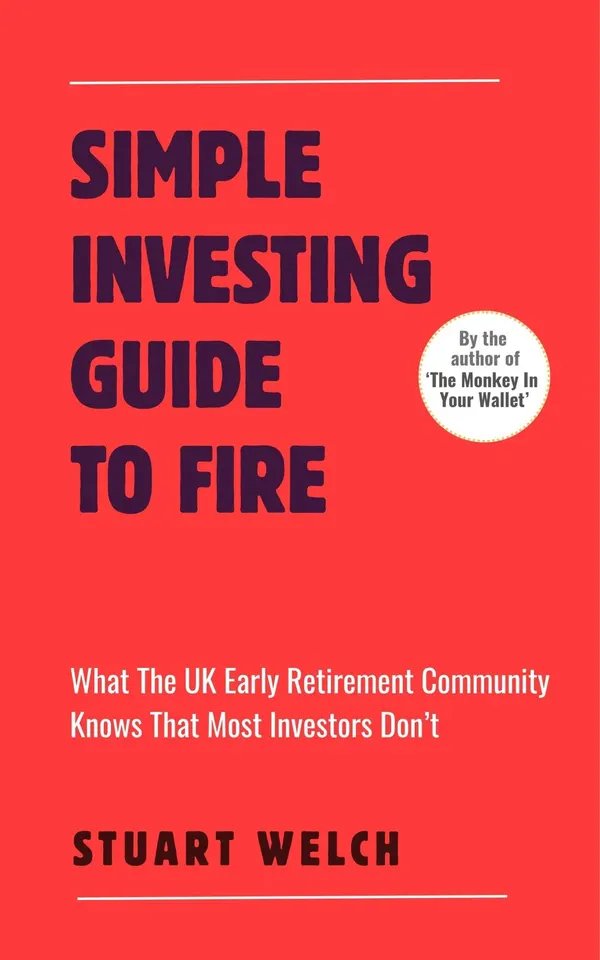
Simple Investing Guide to FIRE
“What the UK early retirement community knows that most investors don't.”
“I've read a few things about FIRE before but a lot of them are very US focused, so I really liked that this is written specifically for people in the UK. It explains things like ISAs, SIPPs, the state pension and the 4% rule without making everything unnecessarily complicated. … I came away feeling like I understood the whole idea of FIRE much better and, more importantly, what I could actually do with it.”Plamena Zahova, Amazon review
Recommended reading on this topic
Full list
The Psychology of Money
Morgan Housel
Short stories about how people actually behave with money. Not a how-to, but it explains why simple plans fail and how to stick with yours.
View on AmazonThe Simple Path to Wealth(US)
JL Collins
Blunt and funny. Spend less than you earn, avoid debt, and put the rest into a broad index fund. The book much of the FIRE movement started from.
View on Amazon